


A Brief Introduction to: Essential Guide to Setting Up Your Woodworking Workshop
Welcome to the world of woodworking, where ancient skills meet modern creativity! Whether you're a novice eager to craft your first project or a seasoned pro looking to refine your techniques, the right tools are your best friends. At woodu.co, we believe that mastering a select few tools can lead to woodworking success, rather than drowning in a sea of gadgets.
Today's woodworking blends traditional craftsmanship with cutting-edge technology, providing a plethora of tools tailored to every skill level and project type. It's not about having every tool under the sun; it's about curating a collection that suits your abilities and project goals.
This guide will walk you through essential woodworking tools, focusing on practical applications and skill development. From hobbyists to experienced artisans, understanding the right tools for your journey is crucial. We'll not only list tools but also discuss their unique features, maintenance tips, and safety guidelines. Remember, success in woodworking comes from mastering the basics, not from hoarding tools!
The Evolution of Woodworking Tools
Woodworking tools have come a long way, from the chisels of ancient Egypt to today's sophisticated CNC machines. Each advancement has broadened the horizons for woodworkers, merging traditional designs with modern materials for unmatched precision.
Essential Hand Tools for Beginners - Building Your First Toolkit
Click any image to buy the tool set
Starting with hand tools is key to understanding wood and honing your skills. Instead of splurging on power tools, focus on mastering hand tools to build your technique and control.
The Workbench - Your Workshop Foundation
Your workbench is the heart of your workshop. Choose one that fits your space, budget, and projects. A sturdy, flat surface with solid clamping options can make all the difference.
Entry-Level Workbenches
Folding workbenches are perfect for those with limited space. Look for features like:
- 25mm thick surface
- Built-in clamping points
- 100kg load capacity
- Quick-release folding mechanism
- Storage options
Popular choices include the Black and Decker Workmate, a practical solution for mobile work.
Professional Grade Benches
For serious woodworking, traditional wooden benches offer stability and versatility. Look for:
- Hardwood construction
- Front and tail vices
- Dog holes
- Minimum 45mm thick top
- Weight over 100kg
Workbench Comparison - From Entry Level to Professional Grade
Choosing the right workbench can transform your woodworking experience. Here’s a quick comparison of popular options:
Woodworking Bench Comparison GuideEntry Level to Professional Grade Workbench Options |
|||
|---|---|---|---|
| Attribute | Black + Decker Workmate | Sealey 4 Drawer Workbench | Sjöbergs Elite 2000 |
| IMAGE: | 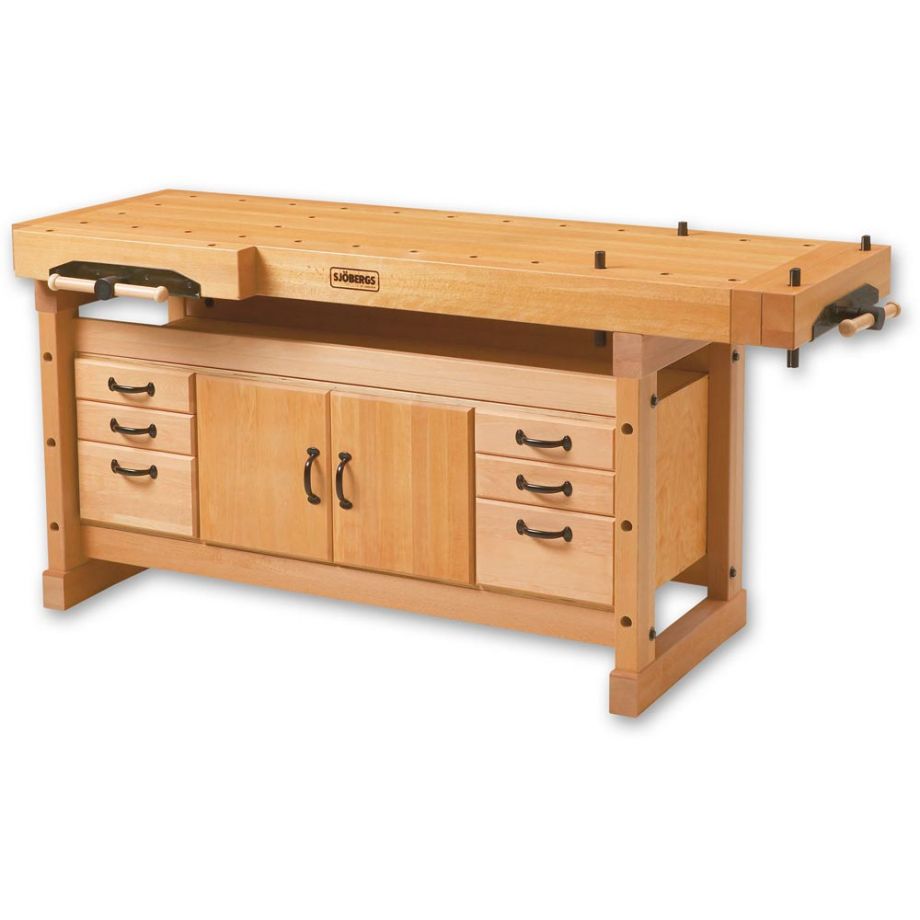 |
||
| Key Feature | Portable folding design | Built-in storage | Professional-grade construction |
| Performance | Supports up to 250kg | Sturdy frame with 4 drawers | Heavy-duty, precision-machined |
| Price Range | £80-120 Check Price | £300-400 Check Price | £2000-2500 Check Price |
| Best For | DIY enthusiasts | Small workshops | Professional woodworkers |
Understanding Your Needs
Your ideal bench depends on your space, work style, and budget. Consider:
- Space: Folding for tight areas, fixed for dedicated spaces.
- Work Style: Hand tools need mass; power tools need good clamping.
- Budget: Start small and upgrade as needed.
Vices and Clamping Systems
Secure workholding is essential. Start with a quick-release vice for holding boards on edge, and consider a tail vice for flat work.
Measuring and Layout Tools
Click any image to learn more or buy
Accurate measurement is the backbone of woodworking. Start with a professional-grade tape measure, steel rules, and a combination square for versatility.
Advanced Measuring Tools
As you progress, consider adding digital calipers and laser measuring devices for precision.
Marking Tools
Clean marking leads to accurate cuts. Essential tools include marking knives and gauges. A bevelled marking knife with a comfortable handle is a must-have.
Essential Cutting Tools for Hand Work
A quality panel saw and tenon saw are crucial for hand-cutting. Crosscut saws are versatile for beginners, while tenon saws excel in joinery.
Essential Chisels and Mallets
*Click any image to learn more or buy
A set of three to four chisels (12mm, 18mm, and 25mm) is ideal for beginners. Pair them with a wooden mallet to avoid damaging handles.
Hand Planes - Types and Uses
Two planes handle most needs: a No. 4 smoothing plane for final surfacing and a low-angle block plane for detail work. Mastering their sharpening and adjustment is key.
Getting Started with Hand Planes
Consider restoring vintage planes for better value and quality. Look for intact soles and minimal rust.
Essential Power Tools - Taking Your Woodworking to the Next Level
While hand tools are foundational, power tools boost efficiency. Focus on versatile tools that can handle multiple tasks.
The Circular Saw - Your First Power Tool Investment
A circular saw offers versatility at a lower cost than a table saw. Pair it with a straight edge guide for precision. Look for models with:
- 165mm blade capacity
- Sturdy baseplate
- Depth adjustment
- Bevel capacity
Cordless Drill/Driver - Beyond Just Drilling
A cordless drill/driver is a workshop essential. Look for:
- 13mm chuck size
- Two-speed gearbox
- 15 clutch settings
- 4.0Ah battery capacity
Orbital Sander - Surface Preparation Essentials
A random orbital sander saves time on larger projects. It provides a smoother finish and is more forgiving than a belt sander.
Router - The Most Versatile Power Tool
A router can do everything from edge profiling to joinery. A mid-sized router with plunge and fixed bases offers flexibility.
Router Selection Tips
Consider a combination kit for maximum versatility at a lower cost. Brands like Makita and DeWalt are reliable choices.
Dust Collection - Often Overlooked But Essential
Good dust collection is vital for health and tool longevity. Start with a shop vacuum equipped with a HEPA filter for small workshops.
Intermediate and Advanced Woodworking Tools - Expanding Your Workshop
As your skills grow, consider investing in specialized tools for greater precision. This section covers tools for more ambitious projects.
Table Saw - The Workshop Cornerstone
A table saw is essential for serious woodworking. Look for:
- Cast iron top
- Reliable fence system
- Minimum 3hp motor
Jointer and Thickness Planer Combination
These machines work together to produce flat lumber. Combination machines save space while offering essential features.
Bandsaw - Precision Cutting Power
A quality bandsaw is unmatched for curve cutting and resawing. Look for a cast iron frame and a minimum 300mm throat depth.
Specialist Power Tools
Domino jointer and track saws are excellent investments for advanced projects, offering precision and portability.
Advanced Hand Tools
Even with power tools, premium hand tools like Veritas planes and Japanese chisels are invaluable for fine detail work.
Dust Collection Systems
As your tool collection grows, a central dust collection system becomes essential. Look for:
- Minimum 2hp motor
- 150mm main duct
- Fine particle filtration
Workshop Safety and Tool Maintenance - Protecting Yourself and Your Investment
Safety starts with proper maintenance and protective equipment. A well-maintained workshop reduces risks and enhances quality.
Essential Safety Equipment
Eye protection, hearing protection, and respiratory protection are non-negotiable for every woodworker.
Eye Protection Recommendations
Upgrade to wrap-around safety glasses for better protection. Full face shields are ideal for routing or turning.
Dust Management and Respiratory Health
Invest in proper respiratory protection to combat wood dust. A half-mask respirator with P100 filters is essential for general work.
Power Tool Safety Features
Modern tools come with safety systems. Familiarize yourself with features like riving knives and blade guards to prevent accidents.
Tool Maintenance Schedules
Regular maintenance extends tool life. Create a schedule based on usage:
- Daily: Clean tools and check cords.
- Weekly: Sharpen tools and lubricate parts.
- Monthly: Deep clean and inspect machines.
Sharpening Systems
Sharp tools are safer. A sharpening station should include diamond stones, waterstones, and a honing guide.
Workshop Organisation
An organised workshop boosts efficiency. Ensure everything has a designated place and label storage clearly.
Building Your Workshop - A Strategic Approach to Tool Selection
Creating a well-equipped workshop takes time. Focus on building a collection that matches your skills and project ambitions.
Quality Versus Cost Considerations
The saying "buy once, cry once" rings true. Premium tools offer better long-term value through durability and performance.
Strategic Tool Acquisition
Plan purchases around project needs. Essential tools for the first year include:
- Quality measuring tools
- Basic hand tool set
- Cordless drill/driver
- Circular saw
- Random orbital sander
Workshop Evolution
As your skills grow, so should your workshop layout. Group tools by function and plan for future expansion.
Comprehensive Guide Summary
Woodworking is a journey of learning and skill development. Each tool you add opens new possibilities while building on your foundational techniques.
Remember, it's not just about acquiring tools; it's about mastering them. Proper maintenance, safety, and efficient practices are just as important as the tools themselves.
Key takeaways:
- Start with quality hand tools.
- Add power tools based on project needs.
- Invest in safety equipment early.
- Maintain tools for safe operation.
- Develop workshop systems that grow with you.
Success in woodworking comes from mastering the tools you have. Focus on skill development alongside your tool collection. Quality tools, proper maintenance, and safe practices are the foundation of enjoyable woodworking. Whether you're a hobbyist or a professional, take your time to thoughtfully develop your workshop and add tools as your skills and projects evolve.
Read the full article on Essential Guide to Setting Up Your Woodworking Workshop at wooduchoose.com
Disclaimer: Some links on this page are sponsored. We only endorse products and services from trusted sources, items that add value and are relevant to our readers, within our specialist sector. Buttons and links may open new windows and we may receive a commission for purchases you make with our associated partners.
 This article was created by a human, written with some help from AI and edited by a human.
Credits: to ChatGPT, Claud.ai. We also love: Jasper, Writesonic.